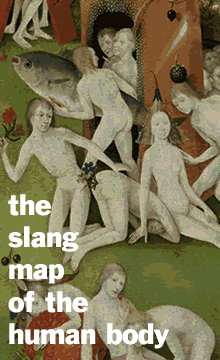
Hair of the Dog
Hi there,
My name is Jose from Peru. I have studied English in Canada, and there I learnt the next expression (I know is from UK): hair of the dog Noun. An alcoholic chaser which will help relieve the symptoms of a hangover, usually needed on the morning after a drinking binge. {Informal}.
I didn't finish to study, now I started to study English in Advanced Level. Today when we were in Class, (the teacher is from USA), I said this expression because one student told us he was hung over, but the teacher told me she hadn´t heard that expression before. So, I would like to ask you if this expression is old-fashioned or only people from UK can understand it? Also, I want to know if there is another expression that means the same (modern) in USA. Your page web is cool, I had a blast when I read it.
Thanks,
JOSE
Dear Jose,
Thanks for writing! I'm glad you like the website. When I first got your letter, I was surprised that your teacher hadn't heard it before. We do use the same term in the US, with the same meaning. I decided that the best way to answer your question would be to conduct a survey to see if other Americans knew it and used it. I asked 23 people between the ages of 25 and 70 about the expression and also about their drinking habits. All but one of the survey takers were native speakers. The last was a fluent non-native speaker who has lived in the US for many years and attended graduate school here.
Overall, the results showed that most people (about 80%) had heard hair of the dog and knew what it meant. 35% had heard someone else use it in the last six months. However, most of those people said that they had heard it on TV or the radio or in a movie - not in day-to-day conversation. Only one person had used the expression in the last six months.
I thought there might be a relationship between knowing the expression and how much a person drank. However, this was not the case. In fact, all of the people who said they had never heard it had drunk alcohol within two weeks of answering the survey. About half of them had experienced a hangover within the last six months, which was higher than the percentage for those who knew the term.
The big difference seems to be age, so your guess that it is old-fashioned was right. While 91% of people over 40 recognized it, only 67% of people between 25-39 did. Although I didn't include any teenagers in my study, I'd bet that even fewer of them would have heard it. It seems to have become like it's raining cats and dogs - an expression most people know and almost no one uses in conversation. But do people use it at all? Apparently they do. I searched for “hair of the dog” in Yahoo and came up with 23,500 results, including a rock band, brewery, and dog groomer, as well as many hangover cure sites.
In terms of an alternative expression, another informal survey didn't turn one up. It might be that it's not as popular now to cure your hangover by drinking more, though I didn't do a survey on that. I do know that several people I asked this question found the idea pretty disgusting.
Other interesting results of this survey included detailed accounts of my friends’ most recent hangovers. One respondent offered a sad story relating the unfortunate effects of homemade Romanian liquor on the human system. Another, though a teetotaler (non-drinker), had gotten a hangover from breathing in the steam of a dish cooked in wine.
And finally, I should mention that “the hair of the dog ”is short for “the hair of the dog that bit you. ”Hundreds of years ago, some people believed that you could be cured of rabies by eating a hair from the crazy dog that had bitten you. If the success rate for curing your hangover with a drink is the same as the success rate for curing rabies with dog hairs, I guess that would explain why it's going out of fashion as a treatment.
Your pal,

A. C. Kemp